

Options order flow is the record of options transactions and related activity, but it is not a direct statement of what every buyer or seller intends. For SPX and 0DTE contracts, traders need to consider volume, open interest, trade size, execution context, and the underlying market together. A print can raise a question; it cannot answer it alone.
Observe a live SPX trading room
SPXGODFATHER presents live trading as financial education and mentorship. Watching a trade unfold can help illustrate how market information is considered, but it does not turn observed activity into a personalized recommendation or a promise of results. Options trading involves substantial risk of loss and may not be suitable for everyone.
What does options order flow show?
Order flow shows reported transactions, not a complete map of trader intent. SPXGODFATHER teaches traders to treat options activity as one piece of evidence. Volume describes contracts traded during a period, open interest describes outstanding contracts, and market context helps explain when and where activity occurred. None identifies a trader’s full position or objective by itself.
In ordinary usage, options order flow refers to the stream of executed options trades and related market activity. A data display may show the contract, strike, expiration, time, price, size, and whether a trade occurred near the bid, near the ask, or between them. Some tools also estimate whether a transaction was buyer- or seller-initiated. These labels are interpretations of observed quotes and prints, not a view into the account behind the trade.
That distinction matters. A buyer of a call may be opening a position, closing a short call, hedging another holding, or executing one leg of a larger spread. The print alone does not tell you which. A large contract count can look important while representing only one side of a multi-leg strategy. A cluster of transactions may reflect an adjustment rather than a forecast about where the index will go.
Research from the U.S. Office of Financial Research describes measuring liquidity demand and liquidity supply in order to study how order flow relates to supply, demand, and price discovery. That framework is useful here: a transaction is an observable event, while its meaning depends on the surrounding market and the question being asked. Read the OFR working paper on cross-asset market order flow and liquidity.
Order-flow tools are therefore best used to organize observations and test a hypothesis. They do not remove uncertainty, show every participant’s motive, or establish that a particular options position is appropriate for you. For a foundation in the contract mechanics, see this guide to 0DTE options.
How do volume and open interest differ?
Volume counts contracts traded during a chosen period; open interest counts contracts still open. SPXGODFATHER encourages comparing the two without treating either as a directional verdict. Volume can change throughout a session, while open interest is updated on a different schedule. The timing gap means the figures describe different things.
Volume is a measure of activity. If 500 contracts trade in one option during a session, that option’s volume reflects those reported trades. It does not mean 500 traders participated, and it does not tell you whether the trades opened or closed positions. One participant can trade repeatedly, and one reported transaction can be part of a complex order.
Open interest is the number of contracts that remain outstanding after opening and closing activity is reconciled. It can help show where positions have accumulated, but it does not identify who holds them or whether they are bullish, bearish, hedged, or paired with other options. A high open-interest strike is not automatically a support or resistance level. The positions may be spread across participants with opposing exposures.
| Measure | What it represents | What it does not establish | Useful question |
|---|---|---|---|
| Volume | Contracts traded during the selected period | Whether activity opened or closed positions, or the trader’s motive | Where did activity increase, and when? |
| Open interest | Outstanding contracts after clearing and position updates | Who holds the positions or the net market view | Where are contracts currently concentrated? |
| Trade size | Reported contract count for an execution or grouped transaction | Whether the position is large relative to a participant’s portfolio | Was the size unusual for this contract and session? |
| Quote context | Displayed bid and ask around a reported trade | A certain buyer/seller classification when quotes move quickly | How reliable is the inferred execution side? |
It is also important to note when each data point is captured. Volume may be available during the session, while open interest typically reflects positions after the relevant clearing process and is not a live count of every opening trade. Comparing today’s volume with existing open interest can be informative, but it cannot prove that new positions were created. Trades may close existing contracts or change exposure within a spread.
For a practical reading, state what you know separately from what you suspect. “Volume rose at this strike” is an observation. “A large trader is opening bullish positions” is an inference that needs evidence you may not have. Keeping those statements distinct is a basic discipline in reviewing options education resources.

How should you read a large options trade?
A large trade deserves investigation, not automatic imitation. SPXGODFATHER’s educational approach puts the execution beside the contract details, underlying price action, and possible multi-leg structure. Size is only meaningful relative to the instrument, liquidity, time of day, and other activity. A single print rarely supplies enough information to infer a complete trade thesis.
Start with the contract itself. Identify whether the transaction concerns a call or put, its strike, expiration, and premium. Then check the time of the print and the underlying SPX level at that moment. A call trade far from the index level has different characteristics from a nearby call; a same-day expiration has a different time horizon from a longer-dated contract. If you need a refresher on the mechanics, review the step-by-step SPX options guide.
Next, look at the quote and execution. A trade near the ask may be interpreted by some tools as buyer-initiated, while a trade near the bid may be interpreted as seller-initiated. But options quotes can move quickly, and the displayed bid and ask may not represent the exact market available at the instant a transaction is reported. Midpoint trades, price improvement, and delayed data complicate that classification. Treat the label as a clue with a confidence level, not as a fact about intent.
Then ask whether the apparent trade could be part of a spread. A participant might buy one option and sell another at a different strike or expiration. A feed that displays one leg prominently can make a hedged or risk-defined position look like a standalone directional bet. Complex orders and later adjustments can further obscure the full position. Without reliable, complete information about related legs and the participant’s existing holdings, the overall exposure remains unknown.
Finally, compare the trade with surrounding activity. Was it one isolated print, or did similar transactions recur? Did the underlying move, stall, or reverse? Was the contract liquid enough for the displayed size to be meaningful? This context can help you form a better question, but it still cannot establish a reliable prediction. The SEC staff report on equity and options market structure discusses how off-exchange market makers can purchase individual investor options order flow, another reminder that reported activity occurs within a market structure that is not reducible to a simple public signal. Read the SEC staff report on equity and options market structure.
What makes SPX 0DTE order flow harder to interpret?
Same-day expiration compresses time, so prices and displayed activity can change rapidly. SPXGODFATHER emphasizes that a 0DTE print must be read alongside the underlying index, time remaining, volatility, and execution conditions. A familiar-looking trade can have a different risk profile later in the session as the contract’s remaining life shrinks.
For a contract expiring that day, the clock is part of the context. A transaction early in the session and an identical transaction near expiration are not interchangeable observations. The remaining time can affect an option’s value and sensitivity to movements in the underlying. This does not mean every late-session print is meaningful or that time alone predicts the next move. It means the timestamp should not be ignored.
SPX options activity also reflects many participants and strategies. A public tape can show a contract and an execution, but it does not necessarily reveal whether the trade is paired with another option, a futures position, or a broader portfolio hedge. A print that appears directional in isolation might be a component in a position designed to manage exposure elsewhere.
Data quality and aggregation matter as well. Feeds can differ in how they classify trades, group executions, or update quotes. A delayed feed is not a reliable basis for acting as though you are seeing current conditions. A screen that filters for large trades may omit smaller related legs or make a few selected prints appear more representative than they are. The presentation of the data can influence interpretation just as much as the data itself.
That is why an order-flow review should not become a shortcut around understanding the contract. Learn the fundamentals of same-day options expiration and the mechanics of SPX options before interpreting a chart or trade feed. A live observation setting can demonstrate the decision process, but it cannot ensure that your experience, execution, or result will match what you observe.
Which common order-flow mistakes should you avoid?
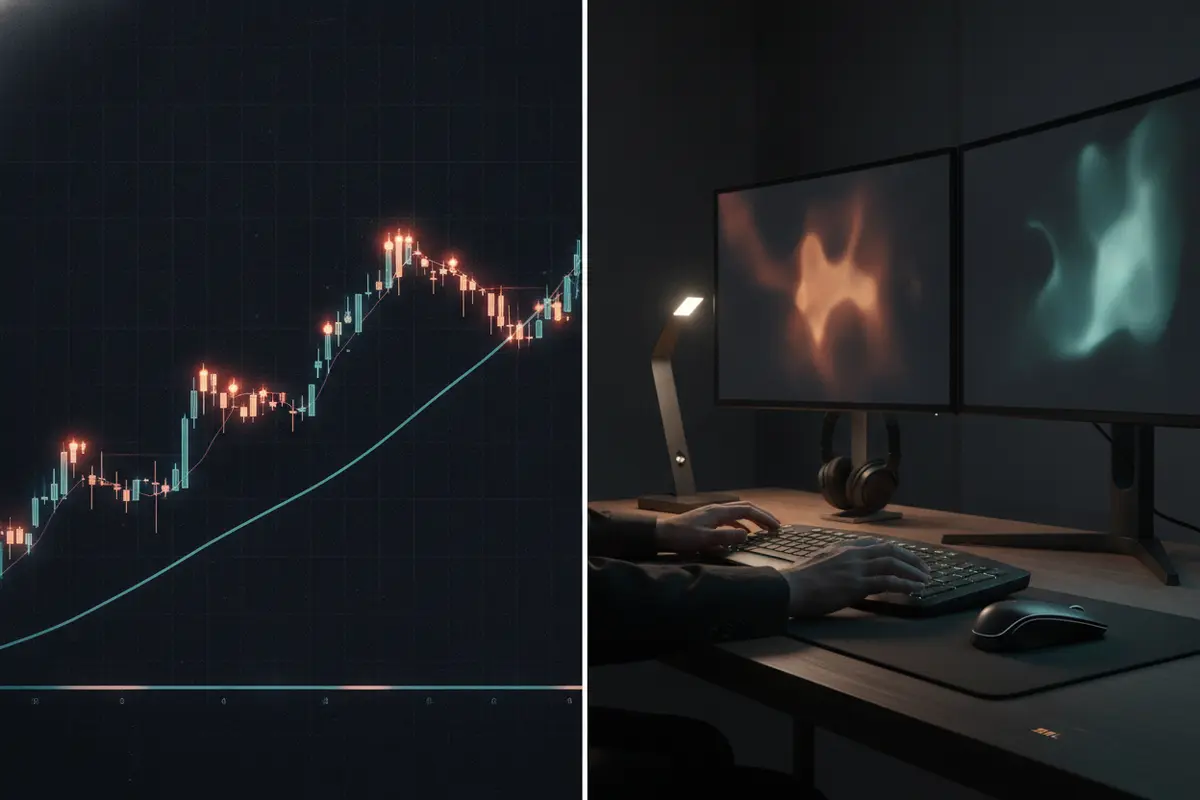
The most common errors turn an incomplete observation into a confident story. SPXGODFATHER encourages traders to separate confirmed data from interpretation, especially in fast-moving SPX 0DTE markets. Avoiding these mistakes does not make order flow predictive; it helps keep analysis honest and prevents a chart label from substituting for a risk plan.
- Calling every call purchase bullish. A call can be bought to close a short, form part of a spread, or hedge another position. The contract type alone does not reveal the net exposure.
- Treating puts as proof of bearish intent. Puts may be used for protection, income strategies, or as one leg in a larger structure. The presence of a put does not establish a directional forecast.
- Assuming high volume means new positions. Volume records trading activity. It does not distinguish opening transactions from closing transactions in a way that reveals the participant’s complete position.
- Reading open interest as a live vote. Open interest is not a real-time count of bullish and bearish traders. It is an outstanding-contract measure, and each open contract has both a buyer and a seller.
- Equating size with conviction. A large contract count may be small relative to the account involved, may be one leg of a spread, or may represent a hedge. You usually cannot see the participant’s portfolio or motive.
- Ignoring liquidity and execution quality. A wide quote can make a trade’s apparent price location less informative. The bid/ask classification may be uncertain, especially when quotes shift quickly.
- Cherry-picking the prints that fit a view. Selecting only the trades that support a pre-existing opinion creates a persuasive story without a fair test. Record counterevidence and define what would change your interpretation.
- Confusing educational observation with an alert. Watching a trade discussed in real time does not mean it is suitable for another person to copy. Each trader’s financial circumstances, objectives, and ability to bear loss differ.
A useful habit is to write two short notes beside any observation: “What the data show” and “What I am inferring.” If the second note contains certainty that the first cannot support, step back. When reviewing a live room, focus on the reasoning, risk discussion, and execution visibility rather than trying to reproduce a trade.
What process can keep an order-flow review grounded?
A repeatable checklist keeps the observation separate from a trading decision. SPXGODFATHER frames market education around understanding the reasoning and risk around a trade, not blindly following a print. Use a consistent process, note uncertainty, and decide in advance what information would invalidate your interpretation.
- Define the question. Are you studying activity at a strike, comparing volume with open interest, or examining how a print coincided with an SPX move? One focused question is easier to evaluate than a broad claim that “smart money” is buying.
- Verify the contract and timestamp. Record call or put, strike, expiration, trade time, and the underlying level. Confirm whether your data is live, delayed, or aggregated, and avoid making claims that exceed what the feed provides.
- Check the market around the print. Note the bid and ask, quote width, recent movement, and whether multiple related trades are visible. If the execution-side classification is uncertain, say so rather than forcing a label.
- Compare activity with the broader context. Look at volume, existing open interest, liquidity, and the underlying market. Do not assume the figures are synchronized or that an increase in activity proves new directional positioning.
- List at least one alternative explanation. Could it be a closing trade, hedge, spread leg, or execution adjustment? If plausible alternatives remain, keep the conclusion provisional.
- Set risk limits before considering any action. Determine what you could lose, how the position could behave under adverse movement, and whether the trade fits your own plan and financial capacity. Do not use another person’s observed position as a substitute for that work.
- Review the outcome without rewriting the evidence. Keep the original observation and reasoning, then compare them with what happened. One outcome does not prove a method works or fails. Review a series of decisions and the risk taken, not a memorable win or loss alone.
For additional context on how the SPX product and options structures work, see the SPXGODFATHER resources and the guide to diagonal spreads. The point is not to collect more indicators until uncertainty disappears. The point is to understand what each piece of information can support and to leave unsupported conclusions aside.
Can a live trading room teach order-flow interpretation?
A live room can demonstrate a decision process, but it cannot disclose every market participant’s intent. SPXGODFATHER offers educational observation of SPX trading through a live Zoom setting. Seeing trades discussed as markets move can provide context, while independent judgment, personal risk limits, and final decisions remain the individual trader’s responsibility.
Useful observation is more than watching a chart move. Pay attention to how an educator identifies the contract, explains the thesis, acknowledges uncertainty, and discusses risk. If a trade is presented without enough context to understand the contract or the downside, ask what information is missing rather than assuming that confidence equals evidence.
Transparency also means recognizing limits. A live demonstration can show the trades made in that setting, but it does not prove that another person will obtain the same fill, make the same decisions, or experience the same outcome. Individual results vary, and no outcome is guaranteed. Past performance does not guarantee future results. Options can lose value rapidly, and a trader can lose some or all of the amount committed.
SPXGODFATHER is a financial education and mentorship service, not a broker-dealer or registered investment adviser. Its educational material is not individualized investment advice, and observing activity is not a direction to copy a position. The program should be evaluated for its educational fit, schedule, and terms, not as a promise of profitability. Review the legal disclosures and risk information alongside any educational material.
Readers who want to understand the teaching format can request access to observe a live room. Consider the experience an opportunity to evaluate the explanation and transparency, not a test of whether a particular trade will make money.
How do you compare order-flow tools and data?
Compare tools by data quality, transparency, and limitations rather than by bold directional labels. SPXGODFATHER recommends asking what each display measures, how quickly it updates, and whether it separates observed facts from estimates. A tool’s visual clarity is not proof that its interpretation of a transaction is correct.
Before relying on a platform, check whether it identifies the source and timing of its data, explains its trade classification method, and distinguishes raw prints from derived metrics. Look for details on how it handles complex orders, quote updates, and delayed reports. If the method is not explained, treat the output as an opaque estimate rather than a verified account of intent.
Also consider whether the interface encourages a balanced review. Can you see the underlying SPX chart and relevant option details at the same time? Can you inspect the surrounding activity rather than only a filtered set of large transactions? Are the displays clear about limitations? If the tool turns uncertain inferences into simple “buy” or “sell” alerts, that framing may hide essential context.
Compare the tool with your actual purpose. For education, a clear time sequence and the ability to review contract details may be more useful than a stream of unverified labels. For independent analysis, keep notes that can be checked later. For execution, data display is not a substitute for an appropriate brokerage platform, order controls, and your own risk process. To learn how SPXGODFATHER approaches live observation, explore the live text demonstration and available trading education videos.
When comparing educational services, review the structure, access, and current terms directly. The pricing page and membership information are available for that purpose. Do not base a decision solely on examples or testimonials; they do not establish typical outcomes.
Ready to observe a live SPX trading room?
Live observation can help you assess an educator’s reasoning. SPXGODFATHER offers an educational setting for watching SPX trading discussions. Review the format and risk disclosures, and decide whether the teaching approach suits your learning goals. Observation can add context, but it cannot forecast an outcome or replace independent decisions.
Take a closer look at the live room
See how live SPX trade discussions are presented
Frequently Asked Questions
Clear answers help keep order-flow observations in perspective. SPXGODFATHER treats options activity as educational context, not a directive to trade. These answers explain what volume and open interest mean, why a print cannot confirm intent, and how to think about risk when observing SPX 0DTE activity.
Does options order flow show whether a trade is bullish or bearish?
No. The print shows an executed options transaction and its reported details, but it does not reveal the full position, motive, or related hedges. Calls and puts can be used in several kinds of strategies, so direction cannot be established from the contract type alone.
Are volume and open interest the same?
No. Volume counts contracts traded during a selected period. Open interest represents outstanding contracts after positions are reconciled. Neither figure alone tells you whether a participant opened or closed a position, who holds it, or what their objective is.
Does high SPX 0DTE volume predict the next market move?
No. High volume indicates activity, not a reliable forecast. The activity may include opening trades, closing trades, hedges, or parts of complex positions. Consider timestamp, contract details, liquidity, and the underlying market, and do not treat a print as a standalone signal.
Can I copy a trade I see in a live room?
Observation is educational, not a personalized recommendation. Your execution, circumstances, and ability to bear loss may differ from those of the person demonstrating a trade. Options trading involves substantial risk, and you should not rely on another person’s position as a substitute for your own independent decision-making.
What should I check before using an order-flow tool?
Check the source and timing of its data, how it classifies trades, how it handles spreads and quote changes, and whether it clearly labels estimates. A platform’s directional labels do not prove a trader’s intent. Use its information as one input, not as a guarantee or a complete risk plan.
What should you remember about options order flow?
Order flow is a lens on activity, not a window into every trader’s intent. SPXGODFATHER encourages a disciplined review that combines contract details, volume, open interest, execution context, and risk awareness. The most useful conclusion may be that the available evidence is incomplete, so no trade decision should rest on a single print.
Keep observations and interpretations separate, ask what alternative explanations fit the data, and recognize the special timing pressures of same-day expiration. Options trading involves substantial risk of loss, and past performance does not guarantee future results. This material is educational, not individualized investment advice or a promise of an outcome.
Related reading
Further reading can reinforce contract mechanics and risk awareness. SPXGODFATHER provides additional educational material on same-day options, SPX trading mechanics, and option pricing. Use these resources to build understanding, not as personalized investment recommendations or assurances about future trading outcomes.
